
AAMTジャーナル「機械翻訳」No. 83 AoGu:A Japanese-English literary parallel corpus from Aozora Bunko and Project Gutenberg
Abstract
This paper introduces a Japanese-English parallel corpus composed of literary works, constructed mainly using bilingual texts from Aozora Bunko and Project Gutenberg. Existing Japanese-English parallel datasets, such as JParaCrawl, JaParaPat, and ASPEC [1, 2, 3], offering coverage of common, patent, and academic domains, they lack resources specifically designed to address discourse-level phenomena and context-aware translation challenges which are existed in literary translation task. To bridge this gap, we build upon the “English-Japanese Translation Alignment Data”1 developed over a decade ago, updating and expanding it to better support research in discourse-level literary translation and document-level context modeling. Baseline experiments with transformer models on the constructed dataset demonstrate limited performance, highlighting the inherent challenges of literary translation and underscoring the need for more advanced methodologies and resources to enhance translation quality for literary texts.
1 https://att-astrec.nict.go.jp/member/mutiyama/align/index.html
1 Introduction
Neural Machine Translation (NMT) has advanced significantly in recent years, driven by innovations in neural architectures and the availability of large-scale parallel corpora. While these developments have greatly improved general translation tasks, literary translation presents unique challenges. It demands capturing nuanced semantic meanings and addressing complex discourse-level phenomena, such as pronoun resolution, inter-sentential consistency, and topic coherence [4, 5, 6, 7]. Traditional MT models often struggle with these aspects, resulting in translations that lack stylistic fidelity, contextual awareness, and narrative coherence. To address these issues, researchers have increasingly turned to context-aware and document-level translation approaches that incorporate broader contextual information into the translation process [8, 5].
Lin et al. [9] noted that the poor performance of context-aware MT models often stems not from their inability to handle long-distance dependencies but from the sparsity of discourse-level phenomena in existing datasets. This underscores the critical need for datasets that include such complex linguistic features, alongside advancements in translation models. Meanwhile, recent studies [8, 5] have highlighted literary translation as an ideal testbed for advancing context-aware MT, given the inherent complexity and abundance of discourse-level phenomena in literary texts.
However, resources for Japanese-English literary translation remain scarce. The only existing dataset, the “English-Japanese Translation Alignment Data” [10], was developed over a decade ago and lacks the scale and depth required for modern research. To address this gap, this study builds upon and significantly expands the existing dataset, providing a more comprehensive resource for Japanese-English literary translation. The updated dataset aims to better support research into context-aware and document-level translation methods for Japanese-English language pair.
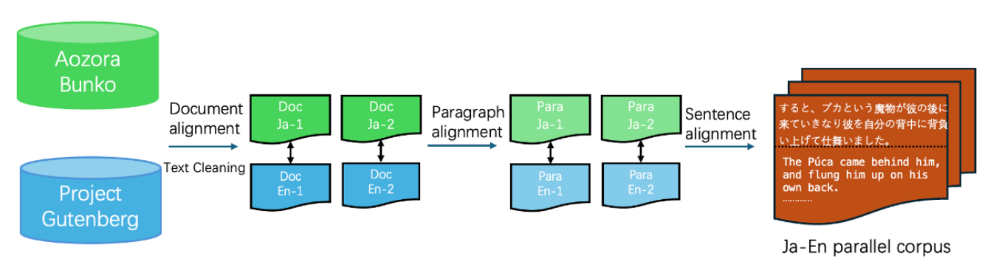
Figure 1 Pipeline of constructing the corpus
2 Related Works
Jin et al. [9] developed a paragraph-aligned Chinese-English dataset containing 10,545 parallel paragraphs extracted from six public-domain novels. This dataset aims to promote research into paragraph-level context-aware MT.
Thai et al. [5] introduced Par3, a multilingual dataset of 121,385 paragraphs from public-domain novels, . Despite its broad scope, the Japanese-English portion remains small, with only 1,857 paragraphs with averaging 4.4 sentences per paragraph(~8,170 sentences).
Jin et al. [11] constructed a large Chinese-English dataset with 5,373 paragraphs, consisting of 548.5K English and 700.9K Chinese sentences. They proposed the challenging chapter-to-chapter (Ch2Ch) translation setting, which showcases the importance of datasets reflecting complex discourse phenomena for literary texts.
Jiang et al. [12] extended the existing BWB [13] corpus with 15,095 discourse-level annotations across 80 documents (~150K words) to better explore the literary MT.
3 Dataset
3.1 Aozora Bunko
Founded in 1997, Aozora Bunko 2 is a digital library providing access to a vast array of public domain works, with a current collection exceeding 17000 items. Moreover, literary works dominate the collection, accounting for approximately 72.4% of the total, with 15,696 titles categorized under this genre alone.
3.2 Project Gutenberg
Project Gutenberg 3, established in 1971 by Michael S. Hart, is the first large-scale digital library dedicated to providing free access to public domain works. It offers over 60,000 texts across genres such as literature, philosophy, history, and science. A notable feature is its collection of professionally translated texts, which ensures high-quality translations for research and linguistic analysis.
3.3 Dataset construction
The main process of dataset construction, as shown in Figure 1, consists of four key steps: document alignment, text preprocessing, paragraph alignment, and sentence alignment.
3.3.1 Document alignment
A random inspection of works from Aozora Bunko and Project Gutenberg (English works) revealed notable differences in their textual characteristics. Most works in Aozora Bunko are partial chapters of novels, individual pieces from collections, or excerpts chosen based on the translator’s preferences, rather than complete works. In contrast, most works in Project Gutenberg are complete novels or fully compiled series. This highlights that potential parallel document pairs often differ significantly in content, with an single Aozora Bunko work typically aligning to only a small portion of a single Project Gutenberg work. Based on this observation, rather than relying on traditional semantic text similarity methods for mining parallel document pairs, we leveraged the capabilities of pre-trained large-scale language models, specifically GPT-4o 4 and Claude-3.5-Sonnet 5, to assist in document alignment.
4 https://openai.com/index/gpt-4o-system-card/
5 https://www.anthropic.com/news/claude-3-5-sonnet
We adopt a 2-stage approach:
1. : For each work in Aozora Bunko, we extract the first 3–5 lines of the text, which typically include the title of the work, the original author’s name, and the translator’s name. We define a pre-trained model as a retrieve-agent, Using a predefined prompt, we aim for the retrieve-agent to provide the English title of the chapter, the potential associated work title, and the original author’s name in English. The details of the prompt are shown in Table 5. Then we implemented an automated script to perform a global character-level match across all metadata of English works in Project Gutenberg using the retrieval information provided by the retrieve-agent. For cases where the retrieve-agent returns “No match” or there are no matching results in Project Gutenberg, we defined a RAG-agent, we first eliminates Japanese works for which they have matched English works. For the remaining Japanese works, we also request retrieval information from the retrieve-agent. If no matches are found, the RAG-agent extracts the first three and last three lines of the text body of Japanese work and sends an updated query to the retrieve-agent. The RAG-agent works to a maximum of three iterations for each Japanese work. The implementation involves RAG-agent module are based on the multi-agent open-source framework AutoGen [14].
2. : We manually reviewed each parallel document obtained from Stage 1, labeled specific chapters in the English works that correspond to the Japanese works, and removed all non-parallel pairs as well as non-English documents from Project Gutenberg. As a result, we obtained a total of 632 parallel document pairs.
3.3.2 Text cleaning
For the Japanese works, we removed the header descriptions and symbol explanations, eliminated phonetic annotations (such as kana readings and kanji readings), deleted input annotations and special character marks, and removed copyright information at the bottom. Additionally, we replaced the iteration mark “/\” with the vertical kana repeat mark (U+3031) and replaced “/″\” with the vertical kana repeat with voiced sound mark(U+3032).
For the English works, we removed all illustration tags and all annotation information.
3.3.3 Paragraph alignment
Using the labeling information from Stage 2 of document alignment, we extracted paragraphs from the English documents. The final parallel paragraphs consist of the original documents of the Japanese works and the corresponding chapters from the English documents.
3.3.4 Sentence alignment
In the presence of irregular line breaks within the text, including intra-sentence line breaks, we merged all lines within each paragraph for both English and Japanese works. Subsequently, we applied the sat-12l-sm model [15] from wtpsplit [16] to perform sentence segmentation on the merged paragraphs, setting a threshold of 0.01 to achieve finer-grained sentence segmentation. Because we aim to use Vecalign [17] to achieve a more reasonable granularity of parallel sentences.
For all segmented sentences, Vecalign was utilized to perform sentence alignment across all parallel paragraphs. The parameters were configured with an overlap size of 12 and a maximum allowable number of merged sub-sentences set to 12. The embedding models employed included the LaBSE model [18] and the LASER2 model [19].

Table 1 Statistics of AoGu and Utiyama’s dataset. #subword refers to the total number of subwords, #sentence refers to the total number of sentence pairs, #doc refers to the total number of document pairs
3.4 Dataset statistics
We completed sentence alignment for 513 out of the 632 parallel documents. For sentence embedding, we employed both the LaBSE and LASER2 models. Table 1 presents detailed statistics of the sentence-level datasets initially constructed using these two embedding models. To compute the number of subwords, the tokenizer from the LaBSE model was utilized.
In 2003, Masao Utiyama et al. developed a Japanese-English parallel corpus 6, aligned at the sentence level, utilizing resources from Aozora Bunko, Project Gutenberg, and Project Sugita Genpaku, et al. This corpus is primarily composed of literary works and poetry, encompassing a total of 160 documents in both Japanese and English. AoGu was built upon this foundation and further updated and expanded. To compare the specific differences, The rows of Utiyama’s dataset in Table 1 presents the statistical information of the dataset developed by Masao Utiyama et al.
6 https://att-astrec.nict.go.jp/member/mutiyama/align
4 Baseline Experiment and Case analysis
We sampled the two datasets obtained using LaBSE and LASER2 with the LaBSE model, setting up two sampling groups with thresholds of 0.4 and 0.6. Four 6-layer trans-former baseline models were trained on the sentence-level dataset using Fairseq [20]. The specific parameter settings are as follows: the Adam optimizer was used, with a label smoothing value of 0.1, a dropout rate of 0.3, an initial learning rate of 4e-4, 3000 warm-up update steps, a maximum of 6144 tokens per batch, an update frequency of 4, and a total of 50 epochs.For evaluation, the BLEU [21] and COMET [22] metrics were adopted, with a beam search size of 4. The COMET model used is wmt22-comet-da [23]. The specific results are shown in Table 2. All experiments are conducted on two A6000 GPUs.
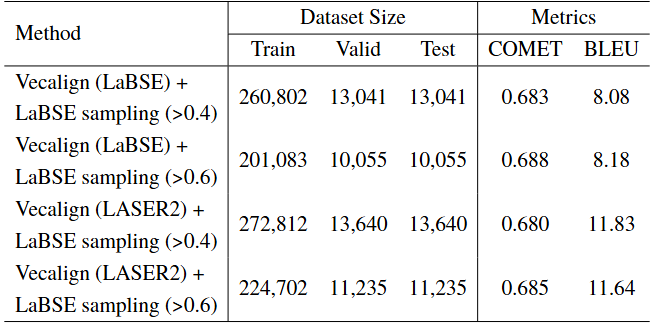
Table 2 The baseline of the sentence-level dataset for 4 different configurations
From Table 2, it can be observed that the BLEU scores for the four baseline settings are relatively low, while the COMET scores are comparatively higher. Table 4 illustrates four translation cases under one specific setting (Vecalign (LASER2) + LaBSE sampling with similarity > 0.4), where the model’s understanding of complex semantics is constrained to the sentence level.
For case 1,the source sentence reflects the speaker’s perspective (Gryde speaking), whereas the reference adopts the listener’s perspective (people listening). The model maintained the source’s perspective. Additionally, “夢中になって” can be ambiguous, describing either the speaker’s state (chosen by the model) or the listener’s state (chosen by the reference).
In case 2, the source text uses “手 紙” (letter) as the pronoun, and the reference preserves “letter” in the same role. However, the model replaces it with “he,” altering the original perspective. This demonstrates the model’s insufficient understanding of contextual coherence.
For case 3, the model failed to handle pronouns correctly, and compared to the model’s direct translation “put his foot to my house twice,” the reference translation leans more toward a free translation: “you would never have put another foot.” Additionally, the reference tends to use the free translation rather than direct translation: “そいつ ぁ 間違え っこ なし だ 。” -> “you may lay to that .”
For case 4, the reference translation’s sentence structures are more diverse, reflecting the characteristics of literary texts, whereas the model’s translation tends to adhere closely to the sentence structure of the source text.
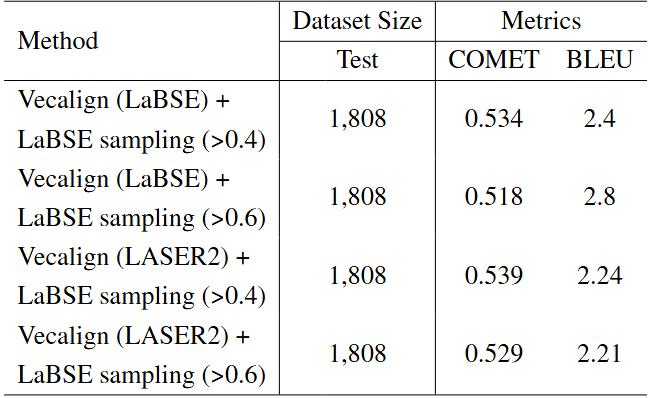
Table 3 The baseline settings tested on out-domain ASPEC test set
These cases reveal that the baseline model trained at the sentence level exhibits limited capabilities in pronoun resolution, modeling complex semantic relationships, and capturing the stylistic and contextual nuances of literary texts. These limitations highlight the need for more advanced approaches, such as paragraph-level or context-aware training, to improve the model’s performance in literary translation tasks.
We also conducted testing on the out-domain ASPEC dataset, and the results are shown in Table 3. The results indicate that the model trained on literary sentence-level data has significantly limited generalization ability, highlighting the substantial differences in characteristics between literary and non-literary texts.
5 Conclusion
This paper introduces a parallel Japanese-English literary corpus, detailing its development process and statistical information. The baseline experimental results demonstrate that literary machine translation tasks impose higher demands on translation models in terms of context awareness, complex semantic relationship modeling, and contextual coherence.
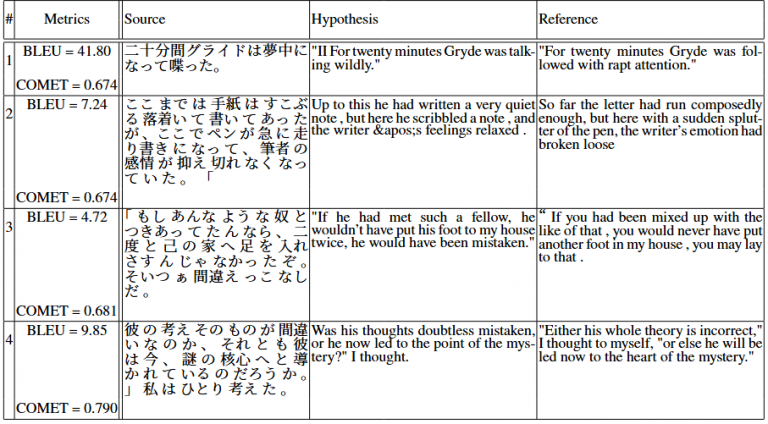
Table 4 Cases for Vecalign (LASER2) + LaBSE sampling with similarity >0.4 settings
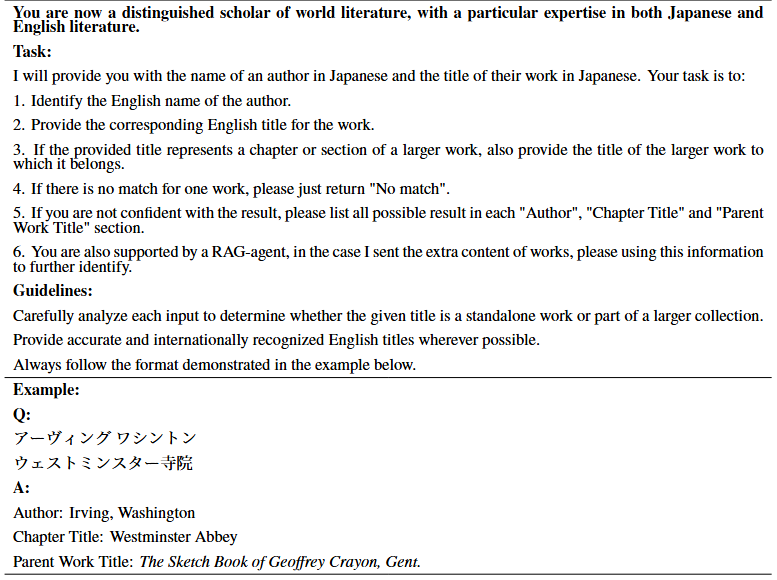
Table 5 The prompt for retrieve-agent
References
[1] M. Morishita, K. Chousa, J. Suzuki, and M. Nagata. JParaCrawl v3.0: A large-scale English-Japanese parallel corpus. In Proc. 13th LREC, pp. 6704–6710, 2022.
[2] M. Nagata, M. Morishita, K. Chousa, and N. Yasuda. JaParaPat: A large-scale Japanese-English parallel patent application corpus. In Proc. LREC-COLING, pp. 9452–9462, May 2024.
[3] T. Nakazawa, M. Yaguchi, K. Uchimoto, M. Utiyama, E. Sumita, S. Kurohashi, and H. Isahara. ASPEC: Asian scientific paper excerpt corpus. In Proc. 10th LREC, pp. 2204–2208, 2016.
[4] E. Matusov. The challenges of using neural machine translation for literature. In Proc. the Qualities of Literary Machine Translation, pp. 10–19, 2019.
[5] K. Thai, M. Karpinska, K. Krishna, B. Ray, M. Inghilleri, J. Wieting, and M. Iyyer. Exploring document-level literary machine translation with parallel paragraphs from world literature. In Proc. EMNLP, pp. 9882–9902, 2022.
[6] M. Fonteyne, A. Tezcan, and L. Macken. Literary machine translation under the magnifying glass: Assessing the quality of an NMT-translated detective novel on document level. In Proc. 12th LREC, 2020.
[7] Y. Liu, Y. Yao, R. Zhan, Y. Lin, and D. Wong. NovelTrans: System for WMT24 discourse-level literary translation. In Proc. 9th WMT, pp. 980–986, 2024.
[8] K. Marzena and I. Mohit. Large language models effectively leverage document-level context for literary translation, but critical errors persist. In Proc. 8th WMT, pp. 419–451, 2023.
[9] J. Lin, J. He, J. May, and X. Ma. Challenges in context-aware neural machine translation. In Proc. EMNLP, p. 15246–15263, 2023.
[10] Utiyama M. and Takahashi M. English-Japanese translation alignment data., 2003.
[11] L. Jin, Li A., and X. Ma. Towards chapter-to-chapter context-aware literary translation via large language models, 2024.
[12] Y. Jiang, T. Liu, S. Ma, D. Zhang, M. Sachan, and R. Cotterell. Discourse-centric evaluation of document-level machine translation with a new densely annotated parallel corpus of novels. In Proc. 61st ACL, pp. 7853–7872, 2023.
[13] Y. Jiang, T. Liu, S. Ma, D. Zhang, J. Yang, H. Huang, R. Sennrich, R. Cotterell, M. Sachan, and M. Zhou. BlonDe: An automatic evaluation metric for document-level machine translation. In Proc. NAACL, pp. 1550–1565, 2022.
[14] Q. Wu, G. Bansal, J. Zhang, Y. Wu, B. Li, E. Zhu, L. Jiang, X. Zhang, S. Zhang, J. Liu, A. Awadallah, R. White, D. Burger, and C. Wang. Autogen: Enabling next-gen LLM applications via multi-agent conversations. In Proc. 1st COLM, 2024.
[15] M. Frohmann, I. Sterner, I. Vulić, B. Minixhofer, and M. Schedl. Segment any text: A universal approach for robust, efficient and adaptable sentence segmentation. In Proc. EMNLP, pp. 11908–11941, 2024.
[16] B. Minixhofer, J. Pfeiffer, and I. Vulić. Where’s the point? self-supervised multilingual punctuation-agnostic sentence segmentation. In Proc. 61st ACL, pp. 7215–7235, 2023.
[17] B. Thompson and P. Koehn. Vecalign: Improved sentence alignment in linear time and space. In Proc. EMNLP and 9th IJCNLP, pp. 1342–1348, 2019.
[18] F. Feng, Y. Yang, D. Cer, N. Arivazhagan, and W. Wang. Language-agnostic BERT sentence embedding. In Proc. 60th ACL, pp. 878–891, 2022.
[19] K. Heffernan, O. Çelebi, and H. Schwenk. Bitext mining using distilled sentence representations for low-resource languages. In Findings of EMNLP, pp. 2101–2112, 2022.
[20] M. Ott, S. Edunov, A. Baevski, A. Fan, S. Gross, N. Ng, D. Grangier, and M. Auli. fairseq: A fast, extensible toolkit for sequence modeling. In Proc. NAACL, pp. 48–53, 2019.
[21] K. Papineni, S. Roukos, T. Ward, and W. Zhu. Bleu: a method for automatic evaluation of machine translation. In Proc. 40th ACL, pp. 311–318, 2002.
[22] R. Rei, C. Stewart, A. Farinha, and A. Lavie. COMET: A neural framework for MT evaluation. In Proc. EMNLP, pp. 2685–2702, 2020.
[23] R. Rei, J. C. de Souza, D. Alves, C. Zerva, A. Farinha, T. Glushkova, A. Lavie, L. Coheur, and A. Martins. COMET-22: Unbabel-IST 2022 submission for the metrics shared task. In Proc. 7th WMT, pp. 578–585, 2022.
